Maternal Ethics
The Mothering Futures®
Regenerative Maternal Ethics Tree of Knowledge©
Despite the centrality of mothering to human life, the maternal has remained largely absent from dominant conversations about ethics, leadership, human development, and cultural transformation. Regenerative Maternal Ethics arises in response to that absence. It is an emerging transdisciplinary field that extends care ethics by exploring how mothering offers a foundational ecology of human becoming.
Drawing from developmental psychology, maternal theory, ecology, female cultural history, evolutionary science, and transdisciplinary inquiry, my work asks a prior question to most ethical traditions: What are the relational conditions from which ethical human beings emerge? Rather than beginning with abstract principles of right action, Regenerative Maternal Ethics begins with the developmental realities through which human capacities for empathy, cooperation, creativity, and responsibility are first cultivated.
I describe this work as regenerative because regeneration is more than sustainability. Sustainable systems seek to maintain what exists. Regenerative systems restore the living relationships that make renewal possible. Influenced by biodynamic thinking and ecological models of living systems, Regenerative Maternal Ethics understands human flourishing as inseparable from the health of the relational ecologies in which life begins. Just as healthy soil nourishes resilient forests, well-supported mothers cultivate the conditions from which resilient people, thriving communities, and life-sustaining cultures can emerge.
This perspective also broadens our understanding of identity. Human beings are not only biological or cultural beings; we are formed within relational and ecocultural systems that shape how we learn belonging, reciprocity, humility, and care. Recovering these maternal and ecological dimensions of human development offers new possibilities for education, leadership, public policy, and cultural renewal.
As artificial intelligence increasingly shapes our future, the question is not only whether intelligent systems can behave ethically, but whether the cultures designing them remain deeply connected to the relational conditions that make ethical life possible. Technologies inevitably reflect the values of the societies that create them. Regenerative Maternal Ethics offers a framework for ensuring that innovation remains grounded in empathy, interdependence, and respect for life rather than efficiency, extraction, and disembodied notions of human progress.
This work also offers an alternative to transhumanist visions that seek to transcend embodiment or dependency. Rather than imagining human flourishing beyond our relational nature, Regenerative Maternal Ethics asks what becomes possible when we more fully understand the evolutionary wisdom already embedded within human development and the life-generating relationships from which we all emerge.
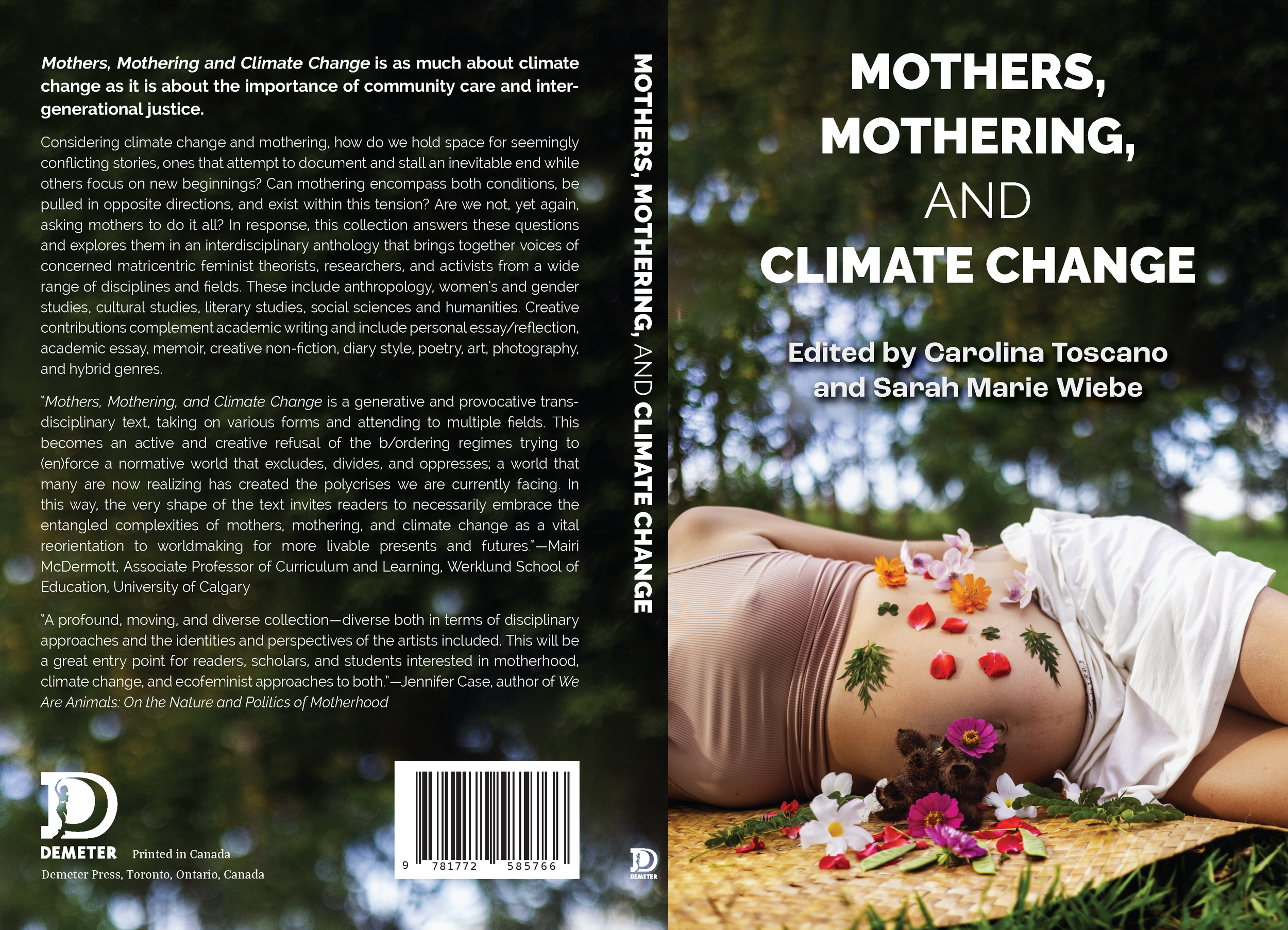
These ideas are explored more fully in my peer-reviewed chapter, "Care-Based Creative Futures: Regenerative Maternal Ethics," published in Mothering and Climate Change (Demeter Press), where I introduce the Regenerative Maternal Ethics Tree of Knowledge as a living framework for cultivating care-based creative futures.